Lubrication for the railway sector
RIVI » Lubrication for industrial sectors » Lubrication for the railway sector
At RIVI Technical Group we develop comprehensive solutions for the railway sectorOur solutions include stationary rail lubrication systems, onboard technologies, maintenance tools, and advanced remote monitoring and control platforms. They combine precise track-side lubrication with corrugation wear mitigation, resulting in longer-lasting, quieter, and more comfortable rails and tracks.
Based on extensive experience and precision engineering technologies, we design systems capable of operating in extreme conditions, ensuring accurate dosing, and providing continuous operation with minimal maintenance. In addition to our stationary RLS and RAAS systems, we develop onboard systems and specialized tools for your maintenance, integrated with remote monitoring solutions that allow for optimized preventive maintenance and automated predictive maintenance.
Stationary systems for railway and tramway tracks
The stationary RIVI systems They are installed on straight sections before curves, where wear and noise generate higher operating costs and cause inconvenience to users and residents. The strategic placement allows the fluid (whether lubricant or friction modifier) to be optimally picked up by the train wheel and distributed evenly along the track.
Our RLS and RAAS systems incorporate advanced software, control panels, and digital solutions that enable real-time monitoring, adjustment of operating parameters, and early incident detection. Thanks to our ongoing commitment to R&D&I, officially recognized as an Innovative SME, we offer customizable, safe railway solutions aligned with the most demanding technological standards in the sector.
RLS: Railway lubrication system
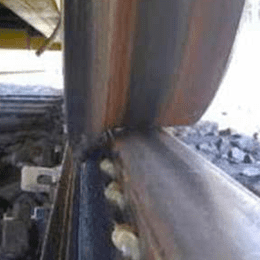
The system RLS (Railroad Lubrication System) is designed to minimize wheel-track wear on the outer rail side, especially on curves. To achieve this, precisely apply drops of grease at equidistant points which, as the train passes, generate a stable and continuous lubricating film.
This system stands out by:
- Significant reduction in wear on the rail and wheels.
- Increased lifespan of the track and reduced maintenance interventions.
- Improved passenger comfort by reducing vibrations.
- Possibility of powering multiple application points from a single cabinet.
The RLS operates with high-pressure pumping, vibration sensors, and advanced control to ensure consistent dosing under any environmental conditions. It is suitable for railways (freight and passenger), subways, and tramways. RIVI designs and manufactures both stationary and on-board RLS systems.

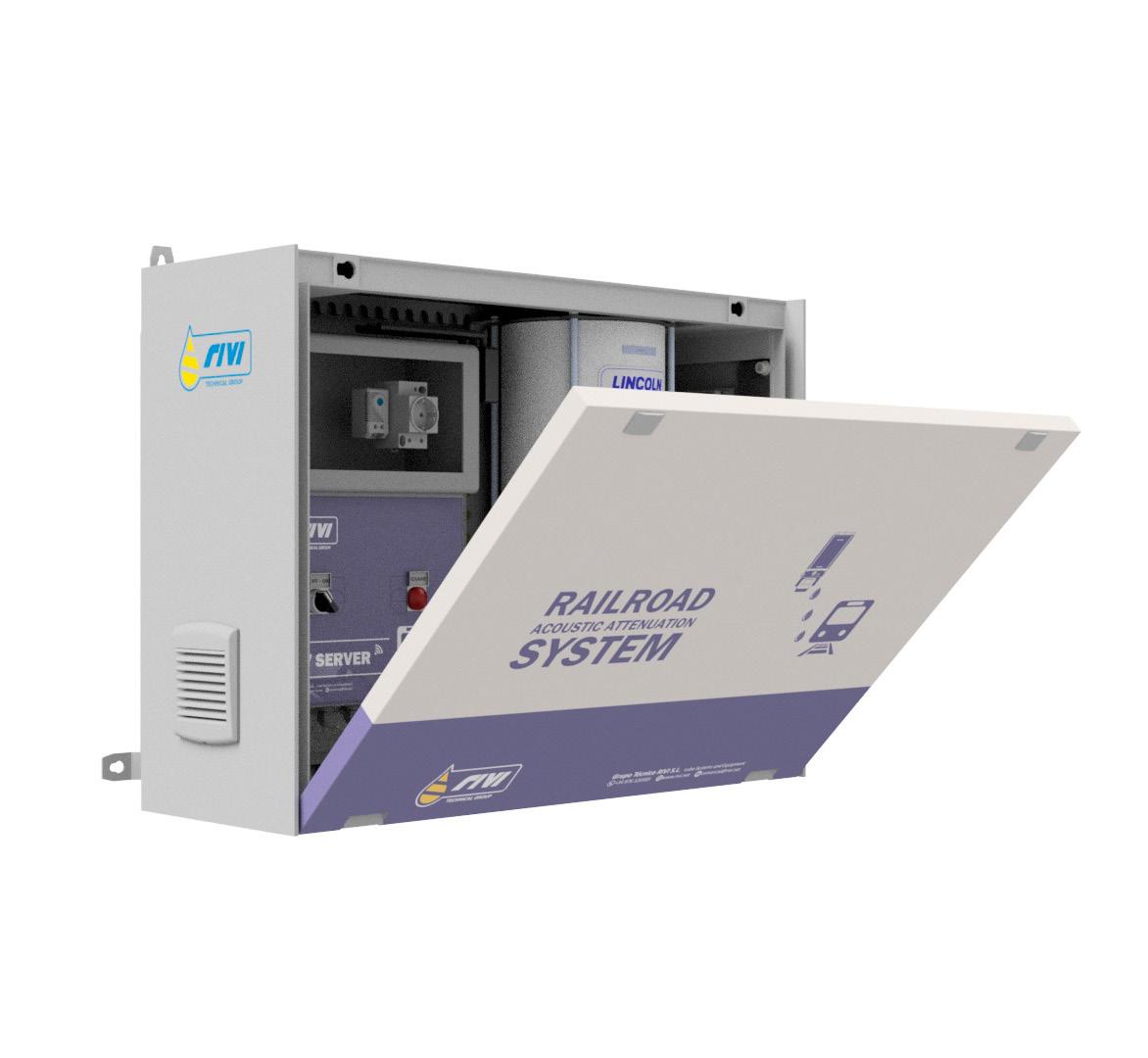
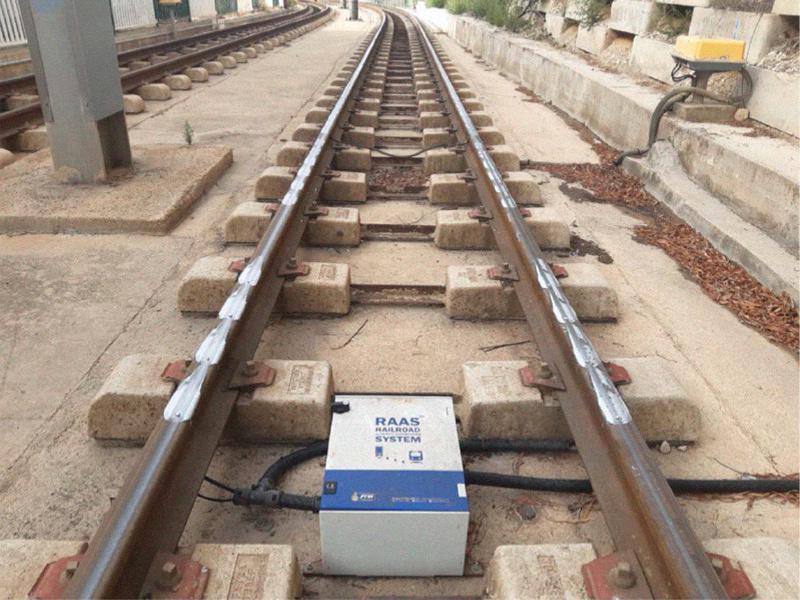
He RAAS The Railroad Acoustic Attenuation System mitigates the effect known as "Wave Wear" and consequently eliminates the characteristic "squeaking" that occurs on sharp curves. Unlike lubricant, the fluid used is a friction modifier, designed not to affect the traction or braking of railway vehicles.
Among its benefits:
- Elimination of friction noise on curves with reduced radii (generally <150 meters).
- Greater comfort for passengers, pedestrians and nearby residents.
- Fully controlled and homogeneous application.
- Compatibility with projection and direct application technologies.
- Completely invisible to the pedestrian/passenger.
The dosage It is performed on the head of via (TOR – top of rail), in lane inside, occasionally exterior according to the geometry ofthe layout. It is suitable for railway lines (freight and passenger), subways, and trams. RIVI designs and manufactures both on-board and stationary RAAS systems.

Application technologies for the railway sector
RIVI offers three application technologies, These technologies were selected based on the infrastructure, rail traffic, and fluid characteristics. Each technology has specific usage conditions that allow for optimization of system performance.
In urban environments, we can also consider a strategic approach to installing stationary systems, adapting the cabinet design to the level of traffic and visibility in the surrounding area. This allows the system to be integrated with a more discreet or "Smart City" aesthetic, reducing the risk of vandalism and improving the coexistence between railway infrastructure and public space.
Airless projection systems
Airless spraying uses nozzles that propel pressurized fluid, directing it precisely to the required point on the rail or wheel flange. This technology is primarily based on systems installed in rail vehicles. It does not require compressed air, and is extremely reliable and accurate.
Main advantages:
- Reliable and accurate.
- Suitable for both RLS and RAAS.
- They do not generate waste.
Systems with applicator bar
The Wiper Bar It deposits the lubricant directly onto the active edge of the rail, distributing it simultaneously at multiple points. It is for exclusive use in stationary systems.
Advantages:
- Homogeneous dosing at several points.
- Use of high-consistency fats.
- Reduced sensitivity to external elements.
Limitations:
- It is not suitable for RAAS.
- It requires track anchoring and periodic brush replacement.
- It can generate long-term waste.
Direct application systems
The direct application, RIVI considers this method the most efficient for stationary systems, and involves drilling small holes in the rail to introduce the fluid exactly where it is needed.
Key advantages:
- Maximum precision and efficiency.
- No waste generation.
- Compatible with high consistency fluids (up to NLGI-2).
- No obstructions or significant maintenance.
- Discreet installation ideal for urban areas.
One single need:
- Make 6 mm perforations in the rail, with prior study of the UIC profile type.

The fluid selection Proper fluid selection is essential for system performance and component durability. At RIVI, we work with the most advanced fluids on the market, compatible with high-pressure equipment.
Lubricating greases
The RLS operates at pressures of up to 350 bar, allowing the use of high-consistency fats. Key aspects taken into account include:
- Compatibility with suspended solids (graphite, MoS₂, PTFE) up to 5 %.
- Importance of micronization of the solid to avoid internal damage.
- Preference for NLGI-1 or NLGI-2 fats, with greater strength and better performance.
Friction modifiers
The friction modifiers used by RAAS have non-lubricating characteristics and must guarantee Total safety in braking and traction.
Points essentials:
- Suitable for working at high pressure (up to NLGI-2).
- Compatibility with micronized solids.
- Precise application to avoid exceeding the recommended doses (≤0.20 cm³ per spot and cycle).
- Prior evaluation to avoid fluids with Teflon or low micronization solids.
Components of our systems for the railway industry
The RLS and RAAS systems They are made up of robust elements, designed to operate outdoors, in adverse conditions and in high-traffic areas.
Main Wardrobe
He vandal-proof outdoor cabinet integrates:
- RV SERVER control panel with advanced PLC.
- High pressure pump.
- Refillable tank with level sensor and agitator.
- Temperature and pressure control.
- Safety valve and quick-fill outlet.
- Remote monitoring modules (GSM, Ethernet, WiFi, 4G/5G).
Available in different sizes and configurations depending on the system (RLS, RAAS or combined).

Train crossing detector
This sensor detects vibrations and activates the dosing just before the vehicle arrives, ensuring precision and immediacy in every cycle. It is crucial to prevent fluid displacement and ensure performance even in urban environments.

Distribution box
Installed near the application points, It distributes the fluid evenly to each outlet. It can be located outdoors or embedded in the pavement depending on the road's needs.
The models usually incorporate 8 or 12 points equidistant.

Projection nozzles
Designed for airless applications, These are weather-resistant structures installed in groups of 4 or 8 units, anchored to the track. They allow for metering at the head or side, depending on the system.

Wiper Bar
Ideal for RLS, it applies grease to multiple points simultaneously. It adapts to the rail type and is especially useful in sections where the lubricant consistency requires direct contact.
Other services for the railway sector
In addition to the main systems, RIVI offers technical solutions that facilitate the installation and operation in any environment.
Onboard systems and catenary lubrication
In addition to the systems installed on track, RIVI Technical Group develops on-board systems for maintenance vehicles and specific solutions for catenary lubrication and ice prevention.
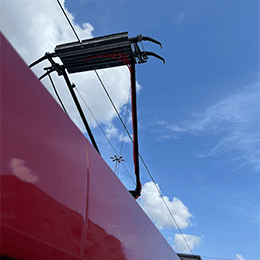
The system stands out COPLA-Luber, designed to automatically apply grease to the contact wire, reducing friction with the pantograph, extending the lifespan of both elements and preventing ice formation in adverse weather conditions.
These solutions are compatible with conventional and high-speed networks, and reinforce the continuity of rail service during the most critical months.
EGAS-24 solar panel
Ideal for remote routes, although not suitable for tunnels or covered spaces.
Designed for locations without access to electricity, the EGAS-24 system incorporates:
- Solar panel.
- Vandal-proof battery.
- Autonomous operation at 24 VDC.
TAD Tool (Direct Application)
The TAD tool It allows for precise rail drilling for direct application systems.
RIVI offers this service when the customer does not have resources or qualified personnel. In addition, a preliminary study of the lane type is always carried out to ensure a perfect application.
Installation & Commissioning (PEM)
This service guarantees that the system is completely operational, optimized and adjusted to the actual conditions of the road.
Our specialized technical team handles the complete system installation., including:
- Preparation of bases.
- Rail machining.
- Installation of boxes and accessories.
- Parameter configuration.
- Initial functional tests.
- 360º service: design, installation and maintenance
- In-house engineering, design and manufacturing
- More than 40 years of experience
- Benefits
Grupo Técnico RIVI offers a complete 360º service to cover all the needs that the customer may have.
Intelligent solutions that minimise breakdowns and ensure continuous operation of machinery.
From installation to supervision, we offer a 360º service so that you don't have to worry about anything.
- Contact Us
At RIVI Technical Group we design, manufacture and install equipment adapted to each industrial sector. Tell us about your project and we will advise you with the best technical and economic solution.
- More than 30 years of experience
- In-house engineering, design and manufacturing
- 360º service: design, installation and maintenance

We were looking for a reliable solution to prevent downtime due to lubrication failures, and the experience has been very positive. The machines are running more smoothly and with fewer incidents.
Miguel Moreno
Plant Technical Manager
Questions about systems for the railway sector
To help you better understand how our systems work and what benefits they bring to rail infrastructure, we have compiled a series of Frequently asked questions focused on the key aspects of the sector.
These answers will allow you to make informed decisions and learn in detail how Grupo Técnico RIVI's solutions contribute to improving the efficiency, safety, and durability of any project. railway network.
How do RLS and RAAS systems help extend the lifespan of rails?
The RLS and RAAS systems apply lubricants and friction modifiers precisely to the critical areas of the rail, reducing wheel-track wear and extending the rail's lifespan with fewer maintenance interventions.
What are the benefits of installing lubrication and damping systems on railway tracks?
These systems protect railway tracks from wear on curves, improve wheel-rail contact, reduce noise and allow for more stable, safe and efficient traffic, especially on urban or heavily trafficked routes.
How does the RAAS system contribute to the control of railway noise in urban areas?
RAAS applies a friction modifier that eliminates squeaking on tight curves without affecting traction or braking, offering an effective solution for controlling railway noise in residential areas and sensitive zones.
Are RLS and RAAS systems suitable for heavy transport lines?
Yes, they are designed for heavy transport lines and high-load trains, working at high pressure and with precise dosing to protect the rail even under very demanding stresses and reduce wear costs.
What characteristics should a good railway lubricant have to guarantee optimal performance?
A railway lubricant must offer adequate consistency (NLGI-1 or NLGI-2), well micronized solids, and thermal stability; combined with RIVI systems, it forms a uniform and durable film that protects the rail under extreme operating conditions.
 Español