Lubrication for the petrochemical industry
RIVI » Lubrication for industrial sectors » Lubrication for the petrochemical industry
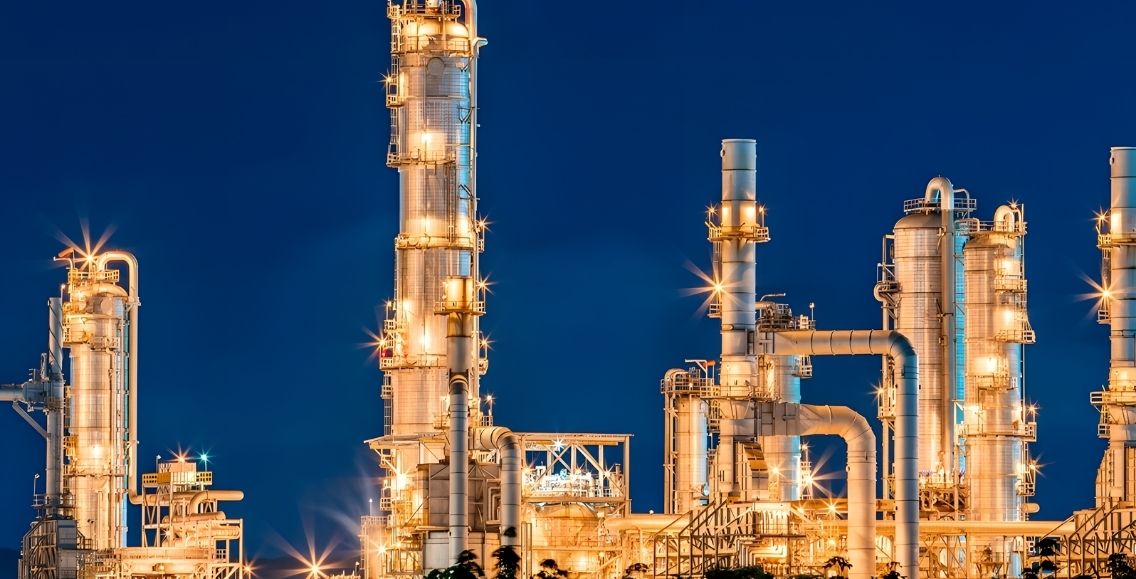
The petrochemical industry is one of the sectors with the highest demand for centralized and automatic lubrication equipment and systems in terms of industrial machinery and processes, Given the demanding nature of the operating environment, the key to maintaining optimal performance and avoiding costly production losses due to mechanical breakdowns is having a suitable lubrication system.
In this sense, RIVI Technical Group offers lubrication solutions automated and centralized, Designed to maximize efficiency, reduce maintenance costs, and ensure operational safety, this section presents the most outstanding lubrication system options for the petrochemical industry, along with their applications and benefits.
Lubrication systems for petrochemical industries
The lubrication systems for the petrochemical industry They must be robust, accurate, and capable of operating in extreme conditions, such as high temperatures, corrosive environments, and continuous operation.
At Grupo Técnico RIVI, we offer a variety of solutions, each tailored to the specific needs of the machinery used in this sector.
This system is designed for applications where lubrication points require a variable amount of lubricant.
With a simple yet effective design, this system allows for precise lubrication distribution throughout a single conduit for each point, avoiding overpressure of the lubricant and ensuring its correct application.

He double line system It is ideal for more demanding environments where a more intensive lubrication. This system allows for greater pressure and control, distributing grease more efficiently between different lubrication points, making it a reliable option for working conditions with extreme temperatures, dirt, or humid and corrosive environments.
Furthermore, the offers a additional flexibility, allowing the configuration of multiple lines for different lubrication needs, which facilitates its adaptation to more complex equipment. It can also be combined with progressive systems, optimizing investment costs.
A more advanced version of this system is the Smart Dual Line System (S-DLS), This system stands out for its self-adjusting, monitoring, and control capabilities. It automatically adapts the pressure and flow of lubricant to the needs of each lubrication point without requiring manual adjustments. Furthermore, it allows the use of different types of grease without changing system components, increasing its versatility.
Advanced monitoring and control technology ensures a more efficient lubrication, This system reduces cycle time, detects potential leaks, and improves maintenance through real-time monitoring. It is also compatible with existing facilities using traditional dual-line systems, facilitating integration into existing plants.


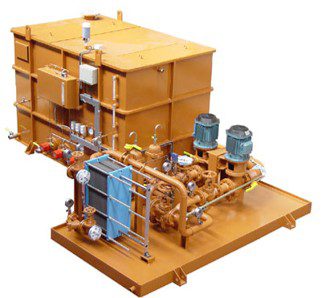
For systems that require oil lubrication, For high-performance generators and compressors, the circulation system is perfect. This system not only lubricates the components, but also acts as a heat sink, maintaining a stable operating temperature in high-speed rotating machinery.
The standards API 614 and API 610 They are key in the design and operation of these systems in the petrochemical and Oil & Gas sector in general, as they ensure compliance with international standards of quality and reliability in high-demand environments. You can find more information on the official website of American Petroleum Institute.

API 682 Sealing Plan System (barrier fluid)
This system is crucial for the protection of mechanical seals in process pumps, especially in applications where the products handled are hazardous or corrosive.
API sealing plans help maintain seal integrity, preventing leaks and extending equipment life.

This system is ideal for machinery with several points lubrication concentrated in small or medium-sized areas.
Using progressive distributors, the system ensures that each point receives the precise amount of fat in the exact moment, optimizing both equipment lifespan and lubricant usage. This is generally the most economical and reliable technical system, in terms of quality/price.

The RIVI oil mist systems These are centralized lubrication solutions that atomize the oil in a stream of compressed air at low pressure (500–900 mm H₂O), generating a mixture with an approximate ratio of 200,000:1 (air/oil) using Vortex or Venturi technology.
Initially, a “dry fog” is obtained (1–3 µm particles, without lubricating capacity) which, thanks to recondensers, is transformed into a “wet fog” with lubricating properties (particles >3 µm) for its application.
The system can be open (manual collection or collection in deposits) or closed with condensate recovery and recirculation, incorporating purification to reuse the oil.
His configuration It integrates a fog generator, control panel, distribution network, manifold, recondensers (spray, fog, condensate and directional), ecological collectors, tanks and purifier, guaranteeing a continuous, precise and automated supply.
This technology provides optimal lubrication with cooling effect, reducing the temperature of the bearings and increasing their lifespan compared to traditional systems, as well as protecting against corrosion and contaminants through a constant film and slight internal overpressure.
At an operational level, it reduces oil consumption, friction (and therefore energy consumption), logistical needs, and compressed air usage, offering a more sustainable solution.
It allows you to operate with pure mist (lubrication and purging) or purge fog (oil bath preservation), the latter being ideal for sliding bearings, gears, turbines or low-speed pumps, where it stabilizes the lubricant, reduces the temperature and can multiply the oil's lifespan by up to five times.

This system uses nozzles for spraying lubricant in areas that require complete coverage, such as open gears of heavy machinery.
When applying the grease in a uniform, Smooth operation is ensured and premature wear (pitting, scaffolding, etc.) is prevented.

Mechanical Lubricator System (oil)
He mechanical lubricator It is a reliable option for machines that require a continuous and precise oil supply, based on the operating speed of the machinery being lubricated. It is generally driven by a rotating machine shaft and therefore does not require an electrical power supply or control system.
This system stands out for its robustness and precision, making it the preferred choice for equipment such as compressors and refrigeration systems.

Special teams
In some cases, the petrochemical applications They require customized equipment to meet specific regulations or extreme conditions. RIVI Technical Group offers tailored solutions, including lubrication systems and fluid technology for specialized machinery operating in harsh production environments.

The petrochemical industry encompasses several phases of the production process, each with its own characteristics and requirements. These phases are mainly divided into three: Upstream, Midstream and Downstream. Each of them has specific lubrication requirements due to the operating conditions and the type of machinery involved.
Upstream
The phase Upstream It refers to the extraction of oil and gas, both on land (onshore) as at sea (offshoreIn this phase, operating conditions are extremely demanding, with equipment that must operate in high-pressure and extreme-temperature environments. Lubrication systems at this stage are critical to ensuring the reliability of drilling pumps, compressors, and other critical equipment operating under these conditions.
Midstream
He Midstream It is responsible for transporting the extracted products to processing and distribution facilities. In this phase, lubrication systems ensure the optimal operation of pumps, compressors, and other transport equipment, both in oil and gas pipelines and in storage systems. Proper lubrication is essential to maintain continuous flow and prevent failures that could interrupt product transport.
Downstream
In the downstream, In the petrochemical industry, which encompasses the processing and distribution of petrochemical products, maintaining high-performance machinery is crucial. RIVI lubrication systems ensure that equipment in refineries and petrochemical plants operates without interruption, reducing maintenance costs and improving productivity.
Lubrication of different components in the petrochemical industry
Within the petrochemical facilities, Different components require lubrication systems adapted to their characteristics and operational needs.
Process pumps
The process pumps They are essential in the petrochemical industry for transporting liquids and gases. A proper lubrication system ensures that the pumps operate efficiently, preventing failures caused by friction and wear.
Engines
Engines, especially large ones used in refineries, They require lubrication systems that not only reduce wear, but also maintain a stable operating temperature to prevent damage.
Actuators
The actuators, which combine motors and gearboxes, These components need to be lubricated and cooled to operate correctly. Our lubrication systems are ideal for ensuring these components maintain their performance under high-load conditions.
Compressors
The compressors for the petrochemical industry They must operate under high pressures and temperatures. RIVI's advanced lubrication systems ensure that these compressors maintain their performance even under the most extreme conditions.
Fans
A fan failure can severely affect production at a petrochemical plant. lubrication systems for fans They ensure that these components function efficiently, even in hard-to-reach locations.
Multipliers and reducers
Lubrication systems for multipliers and reducers In the petrochemical industry, they ensure that gears receive the continuous lubrication they need to operate smoothly at extreme temperatures.
Generators
The generators They must operate without interruption. A proper lubrication system ensures reliable operation, preventing failures and reducing maintenance costs.
Cranes
The cranes used in the petrochemical sector They are exposed to harsh conditions and need an efficient lubrication system to ensure their continuous and safe operation.
Mechanical seals
The mechanical seals Equipment such as pumps and compressors must be kept perfectly lubricated to prevent leaks and ensure safe and efficient performance.
Other types of machinery
In addition to the components mentioned, there are many other pieces of equipment in the petrochemical industry that require advanced lubrication systems, From valves to conveying systems and more. Consult our specialists if you need more information.
Experts in centralized and automated lubrication for Oil & Gas
At Grupo Técnico RIVI, we have extensive experience in the implementation of centralized and automated lubrication systems for the industry of Oil & Gas. Our equipment is designed to withstand the most extreme conditions, improving productivity and reducing operating costs.
In addition, we offer continuous technical support to ensure that our systems maintain optimal performance throughout their lifespan.
- 360º service: design, installation and maintenance
- In-house engineering, design and manufacturing
- More than 40 years of experience
- Benefits
Grupo Técnico RIVI offers a complete 360º service to cover all the needs that the customer may have.
Intelligent solutions that minimise breakdowns and ensure continuous operation of machinery.
From installation to supervision, we offer a 360º service so that you don't have to worry about anything.
- Contact Us
At RIVI Technical Group we design, manufacture and install equipment adapted to each industrial sector. Tell us about your project and we will advise you with the best technical and economic solution.
- More than 30 years of experience
- In-house engineering, design and manufacturing
- 360º service: design, installation and maintenance

We were looking for a reliable solution to prevent downtime due to lubrication failures, and the experience has been very positive. The machines are running more smoothly and with fewer incidents.
Miguel Moreno
Plant Technical Manager
Questions about systems for the Oil & Gas industry
In the petrochemical industry, lubrication systems play a fundamental role in equipment performance and efficiency. Through these frequently asked questions, we aim to answer the most common questions about lubrication in this sector, addressing both the benefits of automation and the associated technical and environmental challenges. Below, we present the answers to some of the most common concerns.
How do lubrication systems help improve productivity in the petrochemical industry?
Lubrication systems improve productivity by ensuring precise and continuous lubrication, reducing the risk of mechanical failures, minimizing downtime, and extending the lifespan of equipment, thereby increasing operational efficiency.
What types of lubrication systems are most common in the petrochemical industry?
The most common systems include single-line, dual-line, oil circulation, progressive, and oil mist lubrication. Each of these is suited to different lubrication needs, ensuring proper lubricant distribution to critical points.
What types of petrochemical machinery require special lubrication?
Equipment such as process pumps, compressors, generators, and cranes require special lubrication due to the high loads, extreme temperatures, or complex operating conditions in which they operate.
What are the environmental impacts of lubrication systems in the petrochemical industry?
Environmental impacts can include soil and water pollution if lubricants are not managed properly, as well as CO2 emissions associated with the energy needed to operate the systems.
What does ATEX mean and how does it affect lubrication in the petrochemical industry?
ATEX is a regulation that governs the use of equipment in explosive atmospheres. In the petrochemical industry, it affects lubrication, as systems must be designed with components that do not generate sparks or excessive heat, complying with safety standards to prevent explosion risks.
 Español