Lubrication for the food and beverage industry
RIVI » Lubrication for industrial sectors » Lubrication for the food and beverage industry
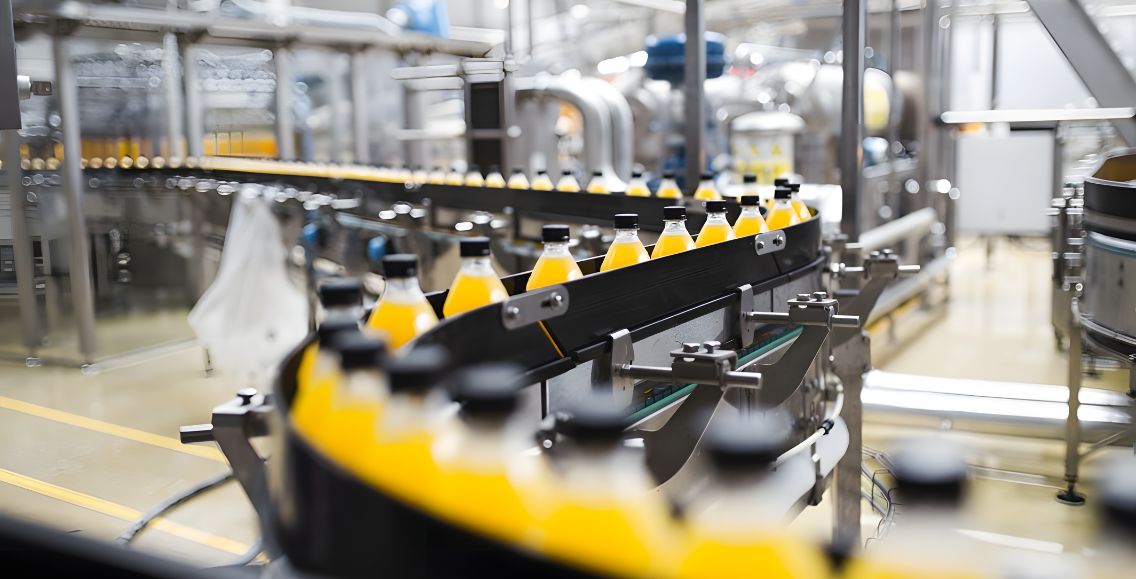
In the food and beverage industry, Efficient equipment maintenance is crucial to ensuring product quality and operational continuity. Lubrication systems play a fundamental role in this process, helping to minimize wear, reduce operating costs, and extend the lifespan of machinery. RIVI Technical Group, We detail the most effective lubrication solutions for this sector.
Lubrication systems for the food industry
The lubrication solutions for the food industry They must comply with strict hygiene and safety standards.
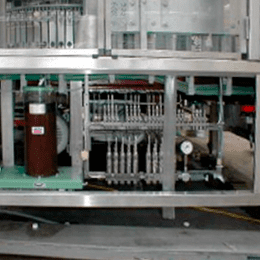
Automatic lubrication systems allow for efficient and continuous lubrication, reducing manual intervention and improving machine performance.
The system of double line It is ideal for long packaging or bottling lines, with consistent greases that require precise dosing of lubricant to the connected lubrication points.
His modular design It allows adaptation to the specific needs of each production line, ensuring constant and uniform lubrication, even in high-demand environments.
The system progressive by zones It offers efficient lubricant distribution based on the needs of each point of the machinery.
This system is especially useful in applications where a precise and adjusted dosage to the operating conditions, which allows for significant savings in lubricant consumption.
The lubricators single point They are ideal for applications where the number of lubrication points is limited, they are far apart, and/or require little lubrication.
They are easy to install and maintain, and provide an effective solution for lubrication. bearings and other mechanical components in the food industry.
Centralized systems for large installations
For larger facilities, Centralized systems allow the lubricant to be distributed through a network of pipes to various points of the machinery.
These systems are highly efficient, as they allow centralized control of lubricant supply, ensuring optimal lubrication and reducing downtime.
Automatic lubrication for individual machines in the food sector
The automatic lubrication for individual machines This ensures that each piece of equipment receives the exact amount of lubricant at the right time. This not only optimizes machinery performance but also reduces premature wear and improves safety in the production process.
Lubrication systems for filling machines
The filling machines, essential in the packaging lines, They require constant lubrication to ensure uninterrupted operation. Automatic lubrication systems provide the necessary amount of lubricant to critical points, preventing failures and guaranteeing process efficiency.

Lubrication in industrial washing machines
In the industrial washing machines, In washing machines that operate in high humidity and residue conditions, automatic lubrication systems are essential to ensure component durability. These systems allow washing machine parts to receive continuous lubrication, preventing wear from friction and ensuring optimal performance.

Palletizing and depalletizing systems
The machinery of palletado and depalletized It must operate without interruption, so efficient lubrication is key. Automatic lubrication systems allow for constant lubrication of these systems, optimizing production speed and reducing maintenance costs.

Lubrication of labeling machines, corking machines and pasteurizers
The labeling, corking and pasteurizing machine These are critical components in food and beverage packaging and bottling lines. Proper lubrication of these machines ensures trouble-free operation, improves operational efficiency, and eliminates unscheduled downtime.


The lines of production and transport They are essential components in the food industry. Lubrication systems in these areas help improve operational efficiency and minimize mechanical failures, ensuring a constant flow of production.
Chain lubrication in transport systems
The chains Chains are key components in food and beverage conveying systems. Proper lubrication of these chains reduces friction, prevents premature wear, and ensures smooth and continuous operation of the production line.
Bottling transport
In the bottling transport, Lubrication of conveyor systems is essential to prevent unexpected downtime and ensure that bottles reach their destination efficiently. A proper lubrication system optimizes flow and reduces operating costs.
Transport of boxes
He transport of boxes It is a critical task on production lines. An efficient lubrication system for box conveyors ensures they function correctly, preventing jams and improving production speed.
Pallet transport
He pallet transport It also requires proper lubrication to maintain efficiency on production lines. Automatic lubrication systems ensure that contact points are always well lubricated, reducing the risk of mechanical failures.
Pumping and transfer equipment for the food industry
The pumping and transfer equipment They play a crucial role in handling liquids and viscous products in the food industry. A proper lubrication system for this equipment ensures that it operates efficiently and without interruption.
Transfer and filling equipment
The teams of transfer and filling They must operate continuously and efficiently. Automatic lubrication of these systems helps reduce friction, ensure accuracy, and improve production speed, thereby reducing downtime and increasing profitability.
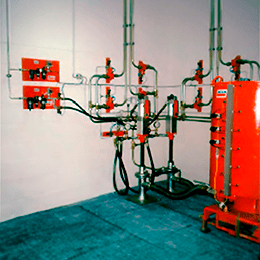
Control and management of oil rooms
The management and control of the oil rooms They are essential to guarantee the quality of lubricants and their distribution to production systems. An efficient control system ensures that oils are properly monitored, preventing contamination and improving equipment durability.
Audit and inspection of fluid installations
The periodic audits and inspections Fluid facility audits are essential to ensure lubrication systems function correctly. These audits help identify potential faults before they become costly problems, improving operational reliability.
Comprehensive services for the food and beverage industry
RIVI Technical Group offers a wide range of comprehensive services for the food and beverage industry. These services are designed to improve production efficiency, reduce operating costs, and ensure compliance with safety and environmental regulations.
Specialized technical consulting
Our team of experts offers specialized technical consulting To help our clients optimize their lubrication systems, we analyze each client's specific needs and provide customized solutions to ensure the best performance of their equipment.
Design, manufacturing and turnkey installation
From design to final installation, we offer turnkey solutions For lubrication systems. Our team handles the entire process, ensuring a smooth and efficient implementation of systems tailored to the specific needs of each client.
Preventive and corrective maintenance
He proper maintenance It is essential to guarantee the durability and optimal performance of lubrication systems. We offer preventive and corrective maintenance services to ensure that equipment operates continuously and without failure, minimizing downtime.
Technical support and after-sales assistance
After installation, we offer technical support and after-sales assistance to resolve any issues that may arise. Our team is available to provide quick and effective solutions, ensuring our customers can always rely on an efficient lubrication system.
- 360º service: design, installation and maintenance
- In-house engineering, design and manufacturing
- More than 40 years of experience
- Benefits
Grupo Técnico RIVI offers a complete 360º service to cover all the needs that the customer may have.
Intelligent solutions that minimise breakdowns and ensure continuous operation of machinery.
From installation to supervision, we offer a 360º service so that you don't have to worry about anything.
- Contact Us
At RIVI Technical Group we design, manufacture and install equipment adapted to each industrial sector. Tell us about your project and we will advise you with the best technical and economic solution.
- More than 30 years of experience
- In-house engineering, design and manufacturing
- 360º service: design, installation and maintenance

We were looking for a reliable solution to prevent downtime due to lubrication failures, and the experience has been very positive. The machines are running more smoothly and with fewer incidents.
Miguel Moreno
Plant Technical Manager
Questions about systems for the food sector
Below, we answer some of the frequently asked questions about lubrication systems in the food industry. These answers will help you better understand how to optimize your processes and ensure the efficient and safe performance of your machinery.
What regulations must lubrication systems comply with in the food industry?
Lubrication systems must comply with regulations of hygiene and safety, such as FDA regulations and ISO 22000 standards, which ensure that lubricants are suitable for contact with food and do not contaminate the product.
How do you design a lubrication system adapted to a food plant?
The design adapts to the specific needs of each plant, analyzing production processes, operating conditions and hygiene requirements to ensure efficient lubrication in accordance with regulations.
What operational risks are eliminated by automating lubrication in food plants?
Automating lubrication reduces the risk of premature wear, mechanical failures, and product contamination, in addition to eliminate human errors and improve operational efficiency.
Can the system be adapted to environments with high humidity or frequent washing?
Yes, The lubrication systems are designed with materials resistant to moisture and corrosion, guaranteeing their effectiveness in environments with high humidity or frequent washing.
Is it possible to centralize the management of several production lines?
Yes, centralized systems allow manage efficiently the supply of lubricant to several production lines, improving control, organization and reducing operating costs.
 Español